





EL CASTELL D’ALCALÀ I LES HORTES DE LLOMBAI
 Quan ja ens trobem dins del carrer Joan Fuster, si ens hi fixem, podem observar a l’horitzó, i segons la llum del dia, les restes del castell d’Alcalà de Gallinera, o de Benissili, com es coneix popularment. Aquest castell roquer, inserit en la serra del Penyal Gros, baix del tossal del Xarpolar, i en els límits del terme de la Vall, era la seu del cabdill al-Azraq. El registre escrit més antic d’aquest castell es troba en el pacte del Pouet (1245), quan el castell va ser cedit per al-Azraq i els seus descendents a Jaume I.
El castell d’Alcalà, que en àrab significa fortalesa, s’hi localitza en el vessant sud de la serra de la Foradada, a l’entrada occidental de la Vall, a 784,7 metres d’altura, dominant així aquest pas natural entre Dénia i Cocentaina. La seua localització ens ofereix una bona vista de tota la vall i fins i tot de la mar en la llunyania. Aquest castell segueix les pautes normals del castell musulmà, amb albacar (pati gran) i celoquia (ciutadella) però en destaca la gran extensió, la complexitat estructural i les defenses naturals que presenta.
Al costat del castell, i segons les hores del dia, podrem albirar la caseta de l’Alemany, construïda a principis dels cinquanta del segle passat. L’Alemany era en realitat un croat nazi que va aconseguir refugiar-se a Espanya quan el règim franquista va acollir els nazis que fugien de la desfeta de la Segona Guerra Mundial. Aquest croat s’anomenava Stefan Gregor Raiter Riter-Riter (1916-1977), natural d’Ivankovo (Iugoslàvia), metge dentista de professió. Més conegut com l’Alemany, que arribà a finals dels anys quaranta a la Vall, fugint dels caçanazis, amb molt de patrimoni. Es comprà una casa a Llombai, i es construí una caseta al costat del castell, segurament a causa de la por que el trobaren per la seua actuació durant la Segona Guerra Mundial.
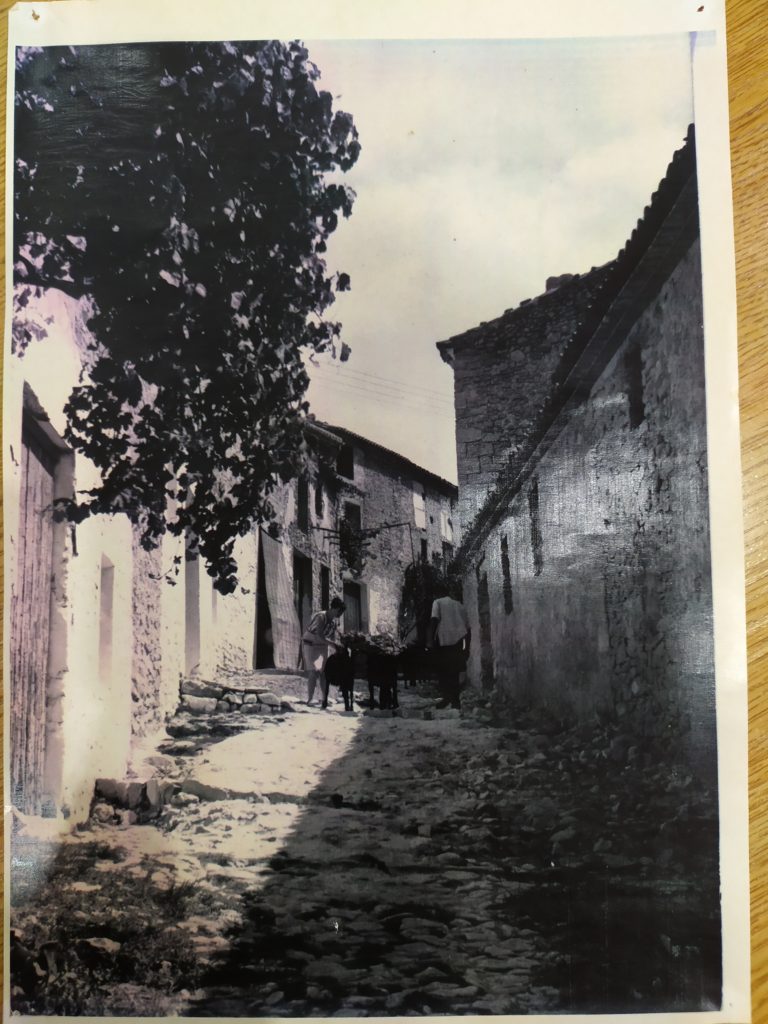
Tot seguit, a la cantonada següent, si entrem al carrer de la Morera, trobaríem la tercera casa a mà esquerra, l’antiga carnisseria de Juan Alemany Camps. I enfront trobaríem l’almàssera d’Àngel Frau, i més amunt, en plena plaça de la Morera, l’almàssera dels Blaios, actualment habitada per Xaro Seguí Domènech. Aquesta plaça, que segurament deu el seu nom a l’existència d’una antiga morera, romangué tota empedrada fins a principis de la dècada dels huitanta, i acaba amb una casa cantonera construïda a finals del segle XVIII, actualment propietat d’Anna Alemany.

EL CASTILLO DE ALCALÀ Y LAS HUERTAS DE LLOMBAI
Cuando ya nos encontramos dentro de la calle Joan Fuster, si nos fijamos, podemos observar en el horizonte, y según la luz del día, los restos del castillo de Alcalà de Gallinera, o de Benissili, como se conoce popularmente. Este castillo rocoso, insertado en la sierra del Penyal Gros, debajo del cerro del Xarpolar, y en los límites del término de la Vall, era la sede del caudillo al-Azraq. El registro escrito más antiguo de este castillo se encuentra en el pacto del Pouet (1245), cuando el castillo fue cedido por al-Azraq y sus descendientes a Jaime I.
El castillo de Alcalà, que en árabe significa fortaleza, se localiza en la vertiente sur de la sierra de la Foradada, en la entrada occidental de la Vall, a 784,7 metros de altura, dominando así este paso natural entre Dénia y Cocentaina. Su localización nos ofrece una buena vista de todo el valle e incluso del mar en la lejanía. Este castillo sigue las pautas normales del castillo musulmán, con albacara (patio grande) y celoquia (ciudadela) pero destaca su gran extensión, la complejidad estructural y las defensas naturales que presenta.
Junto al castillo, y según las horas del día, podremos divisar la caseta de L’Alemany, construida a principios de los cincuenta del siglo pasado. L’Alemany era en realidad un croata nazi que consiguió refugiarse en España cuando el régimen franquista acogió a los nazis que huían de la derrota de la Segunda Guerra Mundial. Este croata se llamaba Stefan-Gregor Raiter, (1916-1977), natural de Ivankovo (Yugoslavia), médico dentista de profesión. Más conocido como L’Alemany (el Alemán), que llegó a finales de los años cuarenta a la Vall, huyendo de los cazanazis, con mucho patrimonio. Se compró una casa en Llombai, y se construyó una caseta junto al castillo, seguramente, a causa del miedo que lo encontraran por su actuación durante la Segunda Guerra Mundial.
A continuación, en la siguiente esquina, si entramos en la calle de la Morera, encontraremos en la tercera casa a mano izquierda, la antigua carnicería de Juan Alemany Camps. Y enfrente, encontraremos la almazara de Àngel Frau, y más arriba, en plena plaza de la Morera, la almazara de los Blaios, actualmente habitada por Xaro Seguí Domènech. Esta plaza, que seguramente debe su nombre a la existencia de una antigua morera, permaneció toda empedrada hasta principios de la década de los ochenta y termina con una casa cantonera construida a finales del siglo XVIII, actualmente propiedad de Anna Alemany.

THE CASTLE OF ALCALÀ AND THE VEGETABLE GARDENS OF LLOMBAI
Once inside Carrer Joan Fuster, looking upwards it is possible to see on the horizon, if the light is right, the remains of the Castle of Alcalà de Gallinera, or the Castle of Benissili, as it is popularly known. This castle, perched up on a rock and inserted in the Sierra del Penyal Gros, below the Xarpolar peak and within the limits of the municipality of La Vall de Gallinera, was the headquarters of the famous al-Andalus leader called al-Azraq. The oldest written record of this castle is found in the Pouet Pact (1245), when the castle was ceded by al-Azraq and his descendants to Jaume I.
The Castle of Alcalà, which in Arabic means “fortress”, is located on the southern slope of the Sierra de la Foradada, at the western entrance to the valley, at 784.7 metres above sea level and thereby dominating this natural mountain pass used for moving between Dénia and Cocentaina. Its location offers a good view of the whole valley and even of the sea in the distance. This castle follows the normal building guidelines of the castles belonging to the al-Andalus period, with an albacar (large courtyard) and a celoquia (citadel), but what stands out is its great extension, its structural complexity and the natural defences.
Next to the castle, and depending on the time of day, we can see what is known as the German’s house, built in the early fifties of the last century. The German was actually a Croat belonging to the fascist Ustasha government in Croatia, which was a very close ally of the Nazis. This man managed to find refuge in Spain when Franco’s regime welcomed the Nazis fleeing their Second World War defeat. The Croat was called Stefan Gregor but used the surnames Raiter, Riter and Richter, and was born in 1916 and died in 1977. He was from Ivankovo (present-day Croatia), and apparently a dentist by profession. But he was better known as the German who arrived in La Vall de Gallinera in the late 1940s, fleeing from the Nazi-hunters, bringing his wealth with him. He bought a house in Llombai, and he also built a hut next to the castle, probably due to the fear that he would be found and made to pay for his activities during the Second World War.
Further along, from the next corner it is possible to go down Carrer de la Morera. The third house on the left was the old butcher’s shop belonging to Juan Alemany Camps. And in front was Àngel Frau’s mill, and higher up, in the middle of Plaça de la Morera, was the Blaios mill, currently inhabited by Xaro Seguí Domènech. This square, which probably owes its name to the existence of an old mulberry tree, remained entirely paved with cobblestones until the early eighties, and ends with a house on the corner built in the late 18th century, now owned by Anna Alemany.