

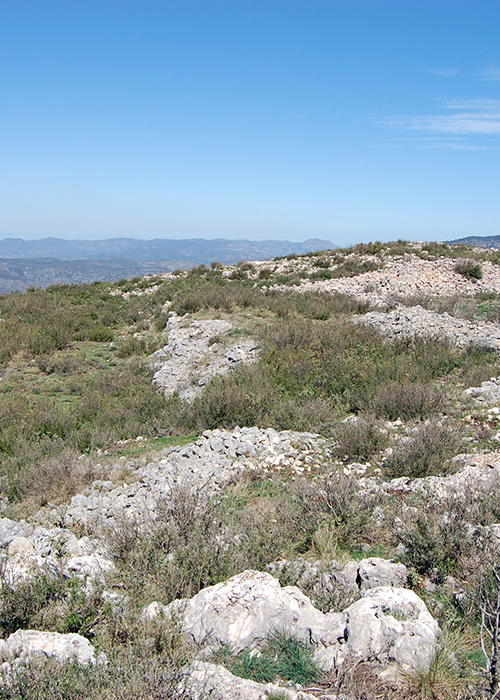
The Iberian site

The convent of Benitaia

The olive mills

The Castles

The cattle tracks

The churches
Xarpolar is a site from the Iberian period, located at the western end of the Sierra Foradada, 900 metres above sea level. It was discovered in 1928 by Ferran Ponsell.
There are remains of a double enclosure of walls that surrounded and defended the village. The floors of some living quarters and other structures of uncertain interpretation can also be identified.
According to the archaeological materials found there, experts place the chronology of the village between the 6th and 1st centuries BC. The pottery that appeared during the excavations is from the Iberian period and certain items stand out, such as the fragments with geometric decoration and the figures made with the same style as the ones from the village of Sant Miquel de Llíria. Greek pottery with red figures and black varnish and Western Phoenician amphorae were also found, which place the town in the 6th century BC.
The objects unearthed were deposited in the Museum of Prehistory of Valencia and in the Municipal Archaeological Museum Camil Visedo Moltó of Alcoy. In addition to the aforementioned ceramics, the following artefacts are also of great interest: an entire falcata, a lock key, fibulae, a spindle whorl, needles, weights, millstones, iron agricultural tools and coins from the Iberian period and from the Roman Republic.
Bibliography:
CASTELLÓ, J.; ESPÍ, I. (2000): El Xarpolar (Planes de la Baronia, Vall d’Alcalà), Catàleg del Museu Arqueològic Municipal Camil Visedo Moltó, Alcoi, pp. 113-116.
GRAU MIRA, I; AMORÓS LÓPEZ, I : Secuencia de ocupación y análisis territorial del poblado ibérico de El Xarpolar (Vall d’Alcalà, Alacant), Archivo de Prehistoria Levantina 30, pp. 239-261.


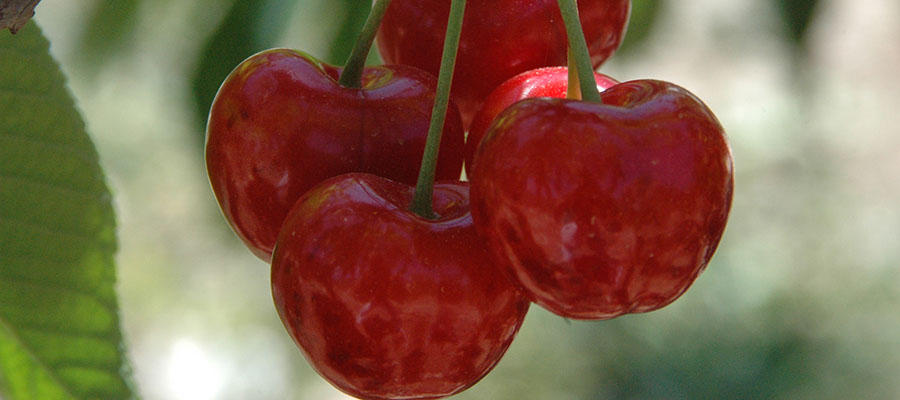


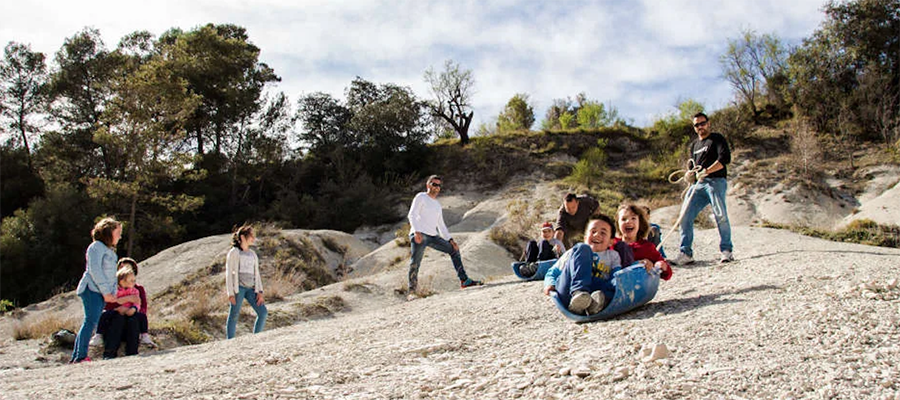


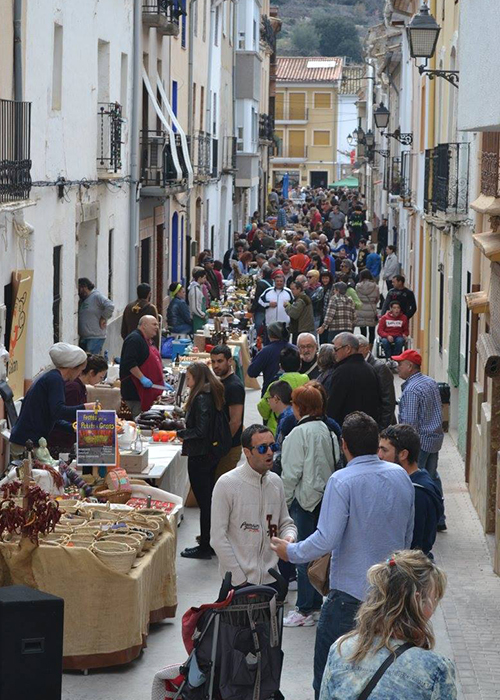 The Market of La Foradà came into existence in December of 2013 thanks to the efforts of the local cultural association Unió Cultural d’Amics i Amigues de la Vall de Gallinera, with the aim of being a market for regional organic products, without the intervention of intermediaries, as well as seeking to dignify the products of La Vall de Gallinera within the market.


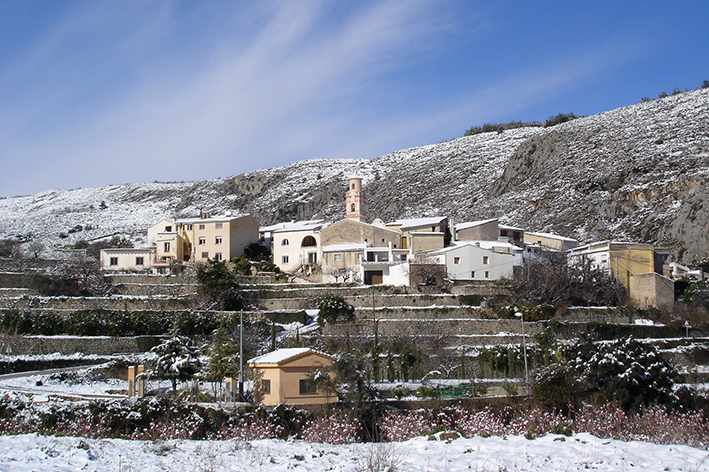

 BENISSILI, mentioned in some texts with the forms Benicelim, Benicilim, Benixilim and Benijilim, belonged to the barony of Alcalà until around 1838. Since the parish dismemberment of 1574 it has been a part of the parish of Alpatró. From the Arabic /Bani Sàlim/, the name of the family or clan that founded the initial farmhouse.


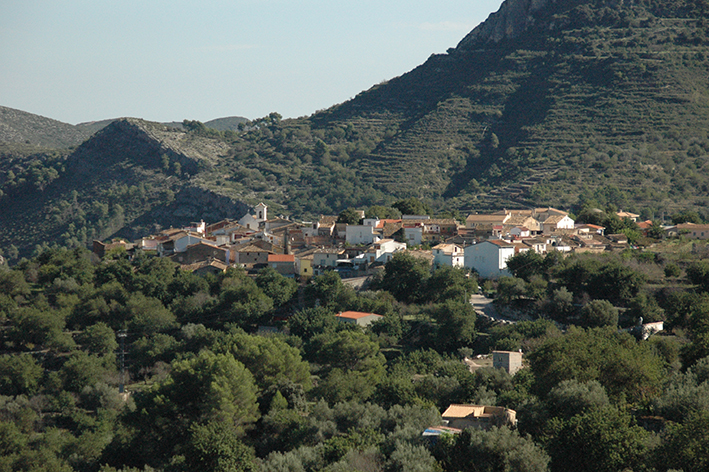

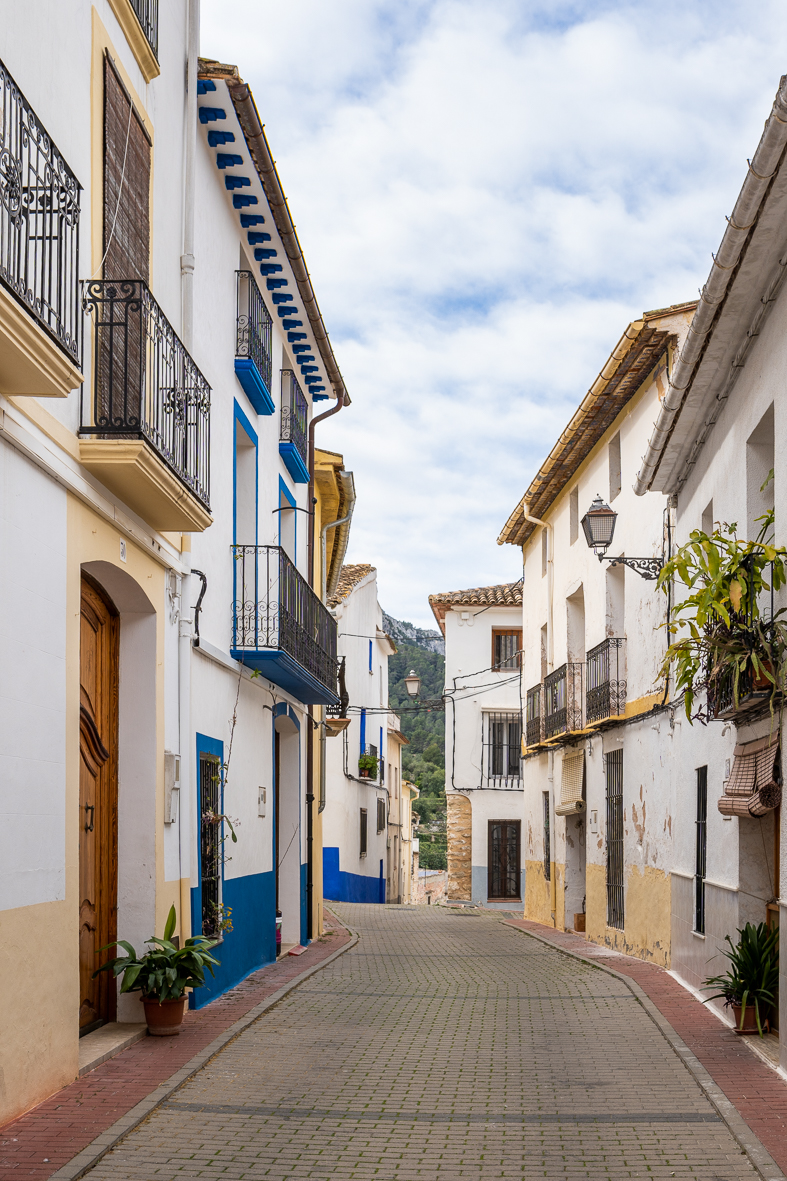 BENIRRAMA (also written as Benirama, Benirahama, Benera-hacma), from the Arabic /Bani Rahma/, name of the family or clan that founded the farmhouse. It appears documented for the first time in Llibre de la col·lecta del morabatí de les valls de Gallinera i Ebo (1369).
 In the middle section, which is horizontal, the walled celestial Jerusalem appears with Saint Peter opening the main gate of the city, accepting a soul presented to him by a guardian angel. The upper section represents the final judgment with God the Father within a mystical almond surrounded by red angels upon a black background, sitting on a throne above the earthly sphere, with arms open, welcoming and separating the blessed from the wicked, the arms outstretched at the same height and with the red hat of passion turning into a purple cloak. To the right of God the Father, the Virgin Mary sits on a throne as mediator presiding over the Deisis, with John the Evangelist and with Peter and James, due to them being the Lord’s favourites and having been present in the Transfiguration of Jesus and at the Garden of Gethsemane; in the second row there are holy women who must have been martyrs, virgins, married saints and so on. In the line on the left, behind John the Baptist, there are indefinite apostles and, in the second row, the first two are deacons and are tonsured and are wearing dalmatics ―one is Esteve and the other could be the Roman Llorenç or the Hispano-Roman known as Saint Vincent of Saragossa―; there is also a Franciscan habit (perhaps Saint Francis of Assisi?) and behind that person there is a monk in a black habit that could be Dominican because the tunic and scapular are white but the hood and the short cloak are black (maybe Saint Dominic?), meaning that the founders of the great medieval mendicant orders are depicted. There is also another person with a long beard and a black habit, who could be Saint Benedict. Next to the heavenly court there are twenty people in niches, dressed in white, representing the chosen who contemplate the glory of God the Father. Their gender is unclear and all appear depicted with the same body position.

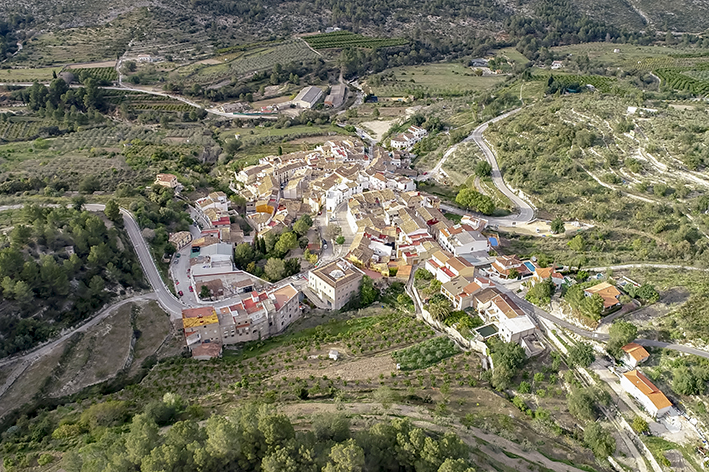

 BENIALÍ (also written as Benicalill, Benihalill, Benihalil, Benihalí, Bonielill, Bemelí). From the Arabic /Bàni Jalil/, name of the family or clan that founded the farmhouse. It appears documented for the first time in Llibre de la col·lecta del morabatí de les valls de Gallinera i Ebo (1369).


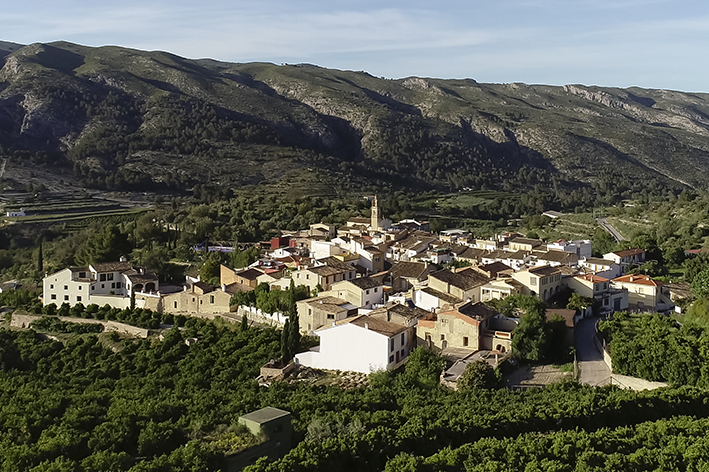

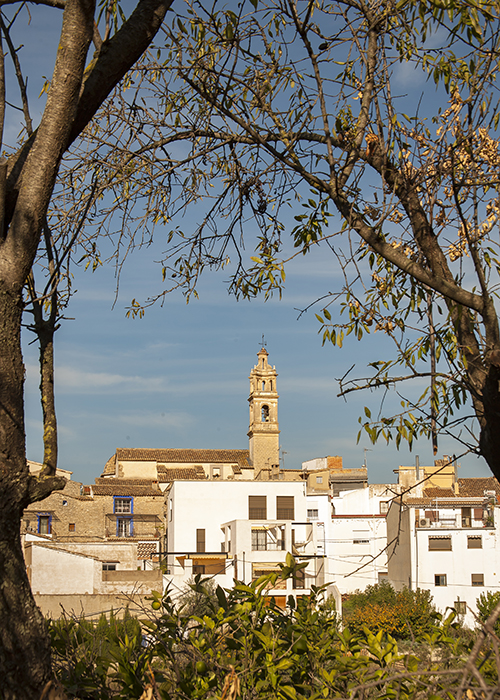 BENISSIVÀ also appears with the variants Beniçiba, Beniciba, Beniciva, Benicida and Beniceba. It is mentioned for the first time in a text written in the year 1310 and is also documented in the 1391 census. From the Arabic /Bani Sabbàh/, a family name.


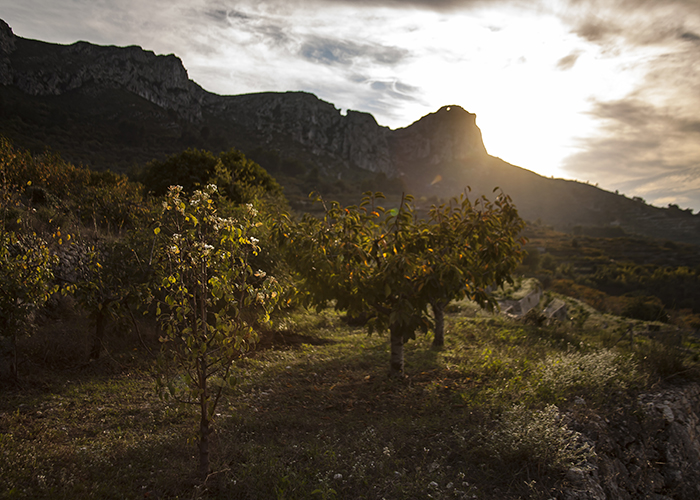
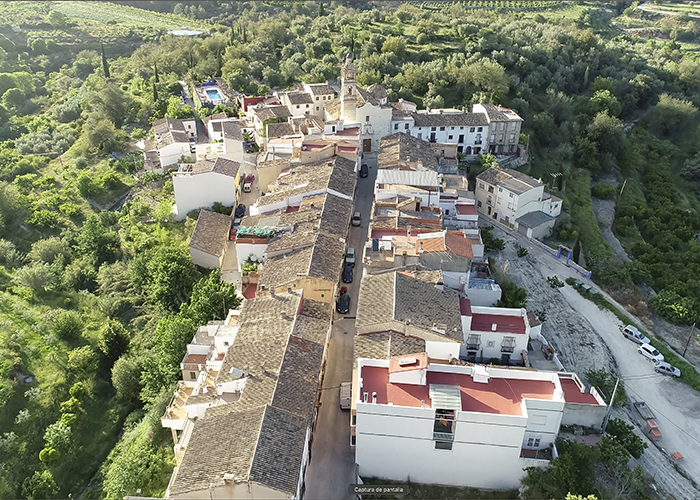
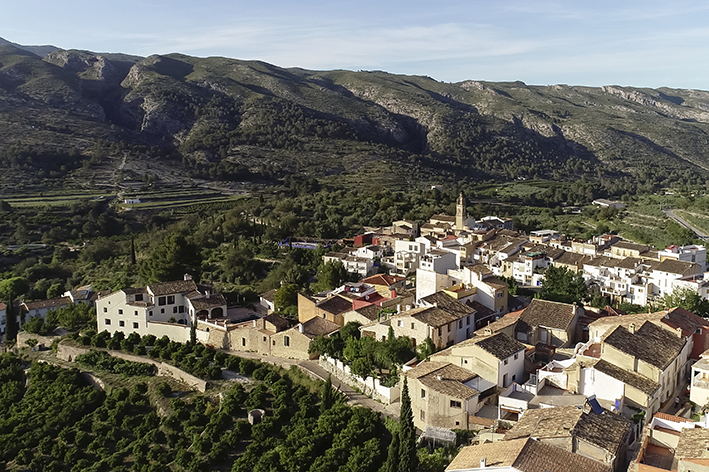

 BENITAIA appears in texts with the variants Benitahar, Benitaher, Benitaer, Benitalla and Benitaya. It appears documented for the first time in Llibre de la col·lecta del morabatí de les valls de Gallinera i Ebo (1369). From the Arabic /Bani Tàhir/, a family name.
